Linsn LED offers the latest poster LED display screens to enhance the vibrancy of your space.
Our poster LED screens strike the ideal balance between image quality and cost efficiency for any event.

Seamless Splicing
Ultra-thin and Lightweight Design
CNC-Machined Aluminum Cabinet
Flexible Installation Options
Specialized Wheels for Easy Mobility


HD Performance
Intelligent Split Display
Sync & Async Play
Wifi/Enthenet
Multi-screen Seamless Splicing
Double Sided Display
Intelligent Split Display
Multiple Control Modes
Sync & Async Play
Wifi/Erthenet
Multi-Screen Seamless Splicing


Foldable Dual-Sided Display
Seamless Splicing for Larger Screens
Smart Cloud Control System
GOB Optional
Multiple Connectvity Options
Flight Case with Ramp Design
Foldable Dual-Sided LED Poster
Seamless Multi-screen Splicing
Plug-and-play All-in-one System
Rental-ready Flight Case with Ramp
Full Front Maintenance
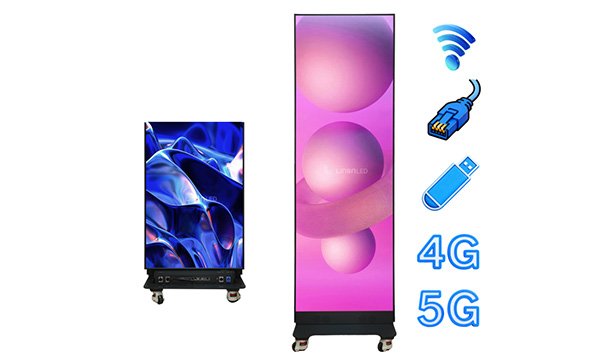
Table of Contents
1. What is An LED Poster Screen?
2. Key Features of Smart LED Poster Screen
3. Main Factors Influencing LED Poster Screen Prices
4. Application Scenarios of LED Poster Screens
5. How to Choose the Right LED Poster Display Screen?
6. How to Install a Digital LED Poster?
7. Difference Between LED and LCD Posters
8. Conclusion
An LED poster screen is a portable, lightweight digital display solution.
Unlike traditional paper posters or LCD screens, it uses high-brightness LED modules to present dynamic content, offering greater visual possibilities.
It goes beyond static images or text, enabling flexible transitions between videos, animations, and real-time information, making the content more engaging and dynamic.
This digital poster boosts information delivery efficiency while offering a more sophisticated visual experience.
In today’s marketing and brand promotion, capturing attention quickly has become a key focus
The rapid adoption and popularity of poster LED screens can be attributed to their unique performance and functionality. Here are the key features:
With ultra-high brightness and a wide viewing angle, it delivers clear content.
Additionally, its color reproduction is exceptionally accurate, making visuals appear more vivid and lively.
Compared to fixed screens, poster LED screens are thinner and more portable. This design allows for easy repositioning without the need for complex installation or adjustments, making them perfect for fast-paced commercial settings.
Supports various convenient content update methods, including Wi-Fi, computer, and mobile control.
Users can quickly switch display content at any time, without relying on third-party services or wasting additional time.
Different usage scenarios require different screen sizes and aspect ratios.
We offer a variety of customizable options to meet various promotional needs.
Whether single-screen displays or multi-screen setups, these screens offer flexible space utilization.
LED technology naturally offers energy-saving advantages.
In long-term usage scenarios, this reduces operational costs and supports the growing trend toward sustainability and environmental responsibility.
When discussing pricing, it’s important to consider more than just the numbers.
The cost of an LED poster screen is influenced by multiple factors, including core technology, design craftsmanship, and customization based on the specific application scenario.
Key factors affecting the price include:
(1) Pixel Density: Higher resolution means more detailed image quality, but it also increases production costs. This is especially important for users seeking high visual impact, such as in luxury retail or art exhibition settings.
(2) Size and Customization: Standard sizes help lower costs, while customized requirements demand higher investments, particularly when creating video walls or non-standard shapes.
(3) Differences in Usage Scenarios: Outdoor LED screens need to be equipped with features like water resistance, dustproofing, and sun protection, making them generally more expensive than indoor models.
(4) Smart Control: Intelligent control features, such as real-time content updates or remote operation, offer greater convenience for users and will also have an impact on the price.
(5) Shipping and Packaging Methods:
While wooden crates and air freight boxes are more expensive, they ensure the product remains intact during long-distance shipping, preventing potential repair issues later.
For short-distance transport, cardboard boxes with foam padding or waterproof packaging are more economical and practical. For high-end rental users, air freight cases or custom packaging may better meet their needs.
It’s important to note that when considering price, many people overlook the long-term usage costs.
For example, the low power consumption design of LED poster display screens significantly reduces operating expenses, while the modular maintenance system shortens repair time and lowers costs.
These “hidden values” are the key to assessing cost-effectiveness.
Indoor LED screens are designed with elegance and precision, offering superior high-definition visuals that shine when viewed up close.
Core Advantage:
The small pixel pitch (such as P1.5 or P2.5) allows for more detailed and lifelike visuals, significantly enhancing the brand image and product display quality.
Application Scenarios:
High-end shopping malls, brand stores, museums, exhibition halls, and similar venues.
Indoor spaces are often limited by the size of the display area, and the flexibility of LED poster screens allows them to showcase a rich variety of content within those constraints.
Outdoor displays must withstand extreme weather conditions while maintaining long-lasting visual quality and reliability.
With the introduction of dual-sided designs, like those in our LC70 D Series, outdoor advertising becomes even more impactful, enabling visibility from multiple angles and directions.
Technical Features:
High brightness (over 5000 nits) and weather resistance are critical for outdoor displays.
They can retain vivid colors even under direct sunlight and are equipped with waterproof, dustproof, and UV-resistant capabilities, ensuring stable performance in all weather conditions.
Applications:
Urban commercial districts, transportation hubs (such as airports and subway stations), sports events, and other high-traffic areas.
GOB technology is a significant innovation in the display industry.
It involves applying a special protective resin coating to the LED chips, enhancing the display’s resistance to impact, humidity, and dust.
Core Advantages:
It significantly improves the durability of the screen, making it ideal for high-traffic environments such as subway stations and airports.
The enhanced waterproof and dustproof capabilities ensure stable performance even in harsh conditions.
Applicable Scenarios:
Locations with heavy foot traffic, like shopping centers and sports arenas. Environments exposed to physical wear or moisture, including outdoor booths and exhibition spaces.
They are becoming a popular choice in modern commercial environments, especially in luxury retail, brand showcases, and high-end shopping malls.
These displays not only serve as advertising tools but also function as stylish space decorations.
Technical Highlights:
Featuring high transparency panels, these displays ensure clear content while seamlessly blending with the background, creating a visually striking “floating” effect.
Advantages:
Excellent transparency allows the background to remain visible while still delivering high-quality advertising content.
They can be integrated with glass, glass curtain walls, and other elements to create a unique visual experience.
Applicable Scenarios:
(1) Retail Store Windows: Ideal for displaying high-end products and brand advertisements.
(2) Exhibition Halls and Museums: Used to present product information, artwork background details, and more.
By combining multiple small-sized modules to form a larger screen, LED displays offer exceptional flexibility, allowing them to adapt to various venues and content requirements.
Core Advantages:
Modular Design: Users can freely assemble the modules to create standard horizontal or vertical displays, or even form irregular shapes depending on the need.
Highly Adaptable: They can be easily adjusted to suit different spaces, making them ideal for temporary events, exhibitions, conferences, and other dynamic scenarios.
Applicable Scenarios:
(1) Exhibitions and Events: Quickly set up large screens to easily accommodate last-minute changes.
(2) Large-Scale Commercial Advertising: Ideal for dynamic ad walls in shopping malls or multi-screen advertising displays in plazas.
The advent of mobile displays has revolutionized the traditional fixed-installation display, offering exceptional mobility and becoming a popular choice for trade shows, event sites, and in-store promotions.
Technical Features:
Built-in Battery: Supports long operation times without the need for a direct power source.
Foldable and Easy to Install: Saves space and reduces transportation costs.
Applicable Scenarios:
Short-Term Events and Exhibitions: Easy to transport and set up, adapting to rapidly changing venue requirements.
Short-term Advertising Solutions: Perfect for mall promotions or corporate exhibitions, allowing quick deployment and effectively capturing audience attention.
When choosing a smart LED poster, it’s crucial to evaluate the specific context, intended use, and long-term operational needs.
To guide end users in making more informed choices from the available options, keep the following factors in mind:
Outdoor Advertising and Public Spaces: These environments require screens with high brightness, UV resistance, and waterproofing.
Pay special attention to the IP protection rating (such as IP65 or above), brightness (typically between 6000-10000 nits), and weather resistance.
Indoor Retail and Commercial Displays: These settings focus on image clarity and color accuracy, so high resolution and vibrant color reproduction are key factors.
Event Venues or Performances: LED poster displays that are easy to install and modular for seamless expansion offer a great advantage, as they allow flexible layout adjustments to meet event demands.
Devices that support cloud-based management simplify maintenance, with remote monitoring and automatic brightness adjustments improving operational efficiency.
Screens with touch or motion detection capabilities enhance interactivity, encouraging more audience participation and engagement.
The device must offer easy and quick repairs, especially with modular components that allow for faulty modules to be replaced rather than replacing the entire unit. This significantly lowers maintenance costs.
For devices that need to operate 24/7, excellent heat dissipation and stability are essential to minimize failures and reduce maintenance needs.
Energy consumption impacts both operational costs and the environment of the space where the device is installed.
Many modern displays come with intelligent features like auto-brightness adjustment and color temperature control, which help save power and lower operating costs.
Ultimately, all choices come down to one core question: does it deliver an exceptional visual experience?
For premium brand presentations, art installations, and other applications requiring precision, opting for a screen that delivers exceptional detail and maintains superior visual quality from a distance is essential.
In color-critical settings like product advertising, a screen with precise color calibration is crucial. This ensures consistent color accuracy over time, preventing distortion and minimizing visual strain.
Before installation, it’s essential to carefully evaluate the site to confirm that the screen’s dimensions, positioning, and line of sight are suited to your requirements.
LED poster displays can be installed in different configurations, including wall-mounted, on stands, or embedded, based on the specific needs of the space.
In certain scenarios (e.g., mobile advertising vehicles, temporary events), a convenient mobile stand might be necessary for easy setup and disassembly, allowing for flexibility in usage.
Ensure stable power access and high-quality signal connections during installation to guarantee proper functionality.
Step-by-step installation guide:
(1) Check the package contents: Make sure all components, including the display module, back cover, connection cables, and screws, are present.
(2) Insert the LED display module into the frame: Ensure the module is properly aligned and securely placed.
(3) Screw in each module: Tighten each module to prevent loosening, which can affect the display quality.
(4) Attach the back cover to the frame: Ensure all connections are tightly secured.
(5) Connect the power and signal: Check the display to ensure it is working correctly.
For a more comprehensive guide, we have prepared detailed video tutorials to walk you through each step.

When making a decision, it’s crucial to understand their technical differences. Below is a detailed comparison:


LED Poster
LCD Poster
LED Poster Vs. LCD Poster
| Feature | LED Poster Display | LCD Poster Display |
| Display Technology | Each pixel is independently lit by LED diodes, providing a self-illuminating display. | Relies on a backlight, with liquid crystal molecules adjusting to control the light. |
| Brightness | Higher brightness, suitable for bright or outdoor environments. | Lower brightness, ideal for indoor use. |
| Contrast | High contrast, with vibrant and true-to-life colors. | Lower contrast, with weaker color depth and detail. |
| Thickness and Portability | Thinner, easy to install and remove, more portable. | Thicker, more difficult to install and move. |
| Maintenance and Lifespan | Long lifespan, modular design makes it easy to replace faulty parts, low maintenance cost. | Shorter lifespan, backlight system requires regular replacement, higher maintenance cost. |
| Application Scenarios | Suitable for outdoor advertising, shopping malls, exhibitions, and high-brightness settings. | Best for static indoor displays or environments with lower brightness needs. |
In this article, we have explored the key features, applications, pricing factors, and how to choose the right poster LED display.
Our LED displays are the ideal choice if you’re looking for a display that meets your needs.
Should you have any questions or need further information, feel free to reach out to us, and our expert team will be happy to assist you.
Building 2, Hongfa High-tech Park, Shiyan Street, Baoan District, Shenzhen, China.
Email: sales@linsnled.com
Phone: +86-186-7583-4292
Ⓒ 2010-2026 All Rights Reserved by Shenzhen Linsn LED Co.,Ltd.


