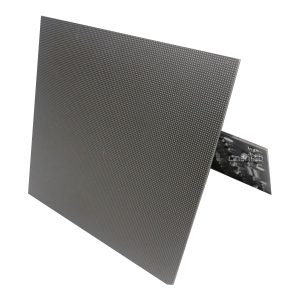
High-quality LED modules for indoor and outdoor displays, offering easy installation, stable performance, and vivid visuals for any application.

5000-10,000(Nits) Brightness
IP65 High Waterproof
In Stock & 2 Years Warranty

Flexible & Soft to design any shap
For Indoor Applicatio
In Stock & 2 Years Warranty

High Brightness to 6500 Nits
High Waterproof Grade IP65
Dual Service Installation
At Linsn LED, each LED module is manufactured with precision to meet the diverse demands of indoor and outdoor applications.
Our production process ensures that every module performs reliably under varying conditions, providing the foundation for high-quality LED displays.
The production process for indoor LED modules emphasizes precision and stability:
(1) Attaching labels for easy identification.
(2) Applying solder paste on the IC surface of the PCB board for secure connections.
(3) Installing resistors, ICs, capacitors, and power interfaces with precision placement.
(4) Conducting high-temperature reflow soldering to ensure a seamless connection.
(5)Performing module testing to ensure performance consistency.
(6)Attaching LED lamps and conducting another round of high-temperature reflow soldering.
(7)Cooling down the module and retesting for stability.
(8) Completing the assembly with mask and bottom shell installation for a durable, polished finish.
Our outdoor LED modules are designed to withstand harsh environments, and their production process includes additional protective steps:
(1) Labeling and applying solder paste on the IC surface.
(2) Installing key components such as resistors, ICs, and power interfaces.
(3) Reflow soldering under high temperatures for durability.
(4) Testing modules for performance reliability.
(5) Applying solder paste and attaching LED lamps.
(6) Conducting a second round of high-temperature reflow soldering.
(7) Cooling and retesting the module to ensure long-term stability.
(8) Applying a protective three-proof paint to guard against moisture, dust, and corrosion.
(9) Drying and applying waterproof adhesive for additional environmental protection.
(10) Completing assembly with the installation of the bottom shell and mask.
(11) Final testing to verify waterproofing and performance stability.
This meticulous production process ensures that every Linsn LED module meets our high standards of reliability, longevity, and performance.
Whether used in a large-scale outdoor installation or a detailed indoor display, our modules are built to deliver exceptional visual experiences.
Just fill the sizes, and get your LED screen budget right now !
The LED screen module is a pivotal component in modern display technology, driving continuous innovation and development in the field. From large outdoor billboards to intricate indoor displays, LED modules are ubiquitous.
This article will delve into the composition, classifications, advantages, application areas, performance factors, and selection methods of LED modules, providing you with a comprehensive understanding of this essential technology.
1. What Is an LED Screen Module?
2. What Are the Basic Components of an LED Module Screen?
3. What are the Types of LED Screen Modules?
4. What are the Advantages of LED Modules?
5. Key Factors Impacting LED Module Performance
6. How to Choose the Right LED Display Module?
7. LED Module Issues and Solutions
8. Conclusion
LED screen module is an important part of modern visual technology. It is integrated with multiple components such as lamp beads, circuit boards and chips to form a complete display unit.
It is not only an important component of LED display, but also widely used in various fields, and is highly favored for its superior display effect and stability.
The composition of LED Screen Modules is not just a stacking of components, but the result of careful design and optimization of each part.
As the key to display, the quality of LED lamp beads directly affects the light output and color performance of the module.
Modern LED lamp beads use high-brightness, high-color rendering chips and advanced packaging technologies such as Chip-on-Board and Surface Mount Device.
The spectral characteristics of LED lamp beads, light attenuation curve and the selection of packaging materials are all crucial technical factors.
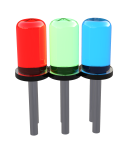
(1) Monochrome LED Module
Monochrome LED module: Mainly red, green or blue, the advantage of this design is its simple spectral output and low cost.
This module is widely used in signal indication and simple information display, such as traffic lights and digital clocks.
(2) Dual-Color LED Module
Dual-color (two-color) LED module: mainly displays multiple colors by adjusting the brightness combination.
The color mixing principle is based on additive color mixing, using red and green LED lamp beads, and realizing the display of different colors through PWM modulation.
This module is suitable for scenes that require simple graphics and text display.
(3) Full-Color LED Module
Full-color LED module: Through the combination of red, green and blue primary color lamp beads, it achieves a wide range of colors.
Full-color LED uses advanced color management algorithms and high-precision optical design to ensure the true reproduction and uniformity of colors.
These modules perform well in advertising screens, stage backgrounds and high-end displays.


The PCB board provides stable power supply and signal transmission for LED lamp beads, which is the basis for the normal operation of the module.
High-quality circuit design can effectively reduce electromagnetic interference and improve the working efficiency and stability of the module.
Efficient heat dissipation design is the core requirement of PCB, because LED lamp beads generate a lot of heat when working.
Aluminum-based PCB is widely used in high-brightness applications due to its good thermal conductivity.
In addition, the wiring design of PCB needs to consider the balanced distribution of current to avoid local overheating and current instability.

The driver chip is responsible for controlling the brightness and color of the LED lamp beads.
High-quality circuit design can effectively reduce electromagnetic interference and improve the working efficiency and stability of the module.
Popular driver chips on the market include Texas Instruments’ LM3409 and Intersil’s ISL97633, which support high-frequency PWM dimming and can work stably over a wide temperature range.
The power supply provides the necessary energy for the LED screen module, which directly affects the brightness and stability of the module.
The design of the power supply module involves voltage conversion and current regulation. A high-efficiency switching power supply can significantly reduce energy consumption and reduce the thermal burden of the power supply on the system.
Common power supply designs include AC-DC conversion, constant current output, and overvoltage protection. High-quality power supply modules should also have good electromagnetic compatibility (EMC) to prevent interference with other electronic devices.
It is used to receive signals from the control system. In modern LED display systems, RJ45 interface (based on Ethernet) and fiber optic interface (for high data transmission rate) are common choices.
The selection of signal interface should consider transmission distance, data rate and system compatibility.
The signal output interface transmits the signal to the next module. For large-scale display systems, fiber optic interface is widely used due to its high bandwidth and long-distance transmission capability.
In addition, the design of the output interface also needs to consider the integrity and stability of the signal to ensure the reliable operation of the system.
The power output interface is used to provide power to subsequent modules. Reasonable power output design can effectively reduce voltage drop and current loss, thereby ensuring the stability and performance of the entire display system.
It includes a fixed frame, a heat sink and a protective cover. The design of the heat sink needs to ensure that the LED panel module can effectively dissipate heat when working under high load, and the protective cover is used to protect the module from the external environment.
The design of the fixed frame needs to consider the convenience of installation and the stability of the module.
The production of modules requires sophisticated manufacturing processes and strict quality control to achieve high resolution and color consistency.
They usually use high-density LED lamp beads to ensure that the image is delicate and grainless when viewed at close range.
In addition, efficient heat dissipation technology and anti-interference design are used to ensure long-term stable operation.


Outdoor modules focus on improving the protection level of the modules, such as waterproof, dustproof, and UV resistance. LINSN LED uses weather-resistant materials to ensure that it is still clearly visible under strong light.
Researchers are committed to optimizing the energy efficiency ratio and thermal management technology of the modules to reduce energy consumption and extend the life of the modules.
In addition, outdoor modules must have a high refresh rate and contrast to cope with rapidly changing advertising content and complex outdoor light conditions.


Fexible LED display module represent innovation and breakthroughs in LED display technology, and their production involves high-precision flexible circuit board manufacturing and reliable packaging processes.
It provides new possibilities for interior decoration, event settings, creative advertising, etc., and promotes the development of LED display technology.


Dual In-line Package uses traditional packaging technology to encapsulate LED chips in resin materials and connect them to the circuit board through pins.
This type of product was widely used in the early days of the industry, but now it has been gradually eliminated as the industry matures.


Surface Mounted Device use surface mounting technology to directly solder LED chips on the PCB without passing through the circuit board. Nowadays, this type of lamp bead is the mainstream product in the industry.
Chip On Board directly encapsulate multiple LED chips on the PCB and protects them with coating or potting materials.
Compared with the first two methods, it can achieve higher pixel density, and due to the overall package, the heat dissipation performance is better than SMD LED.
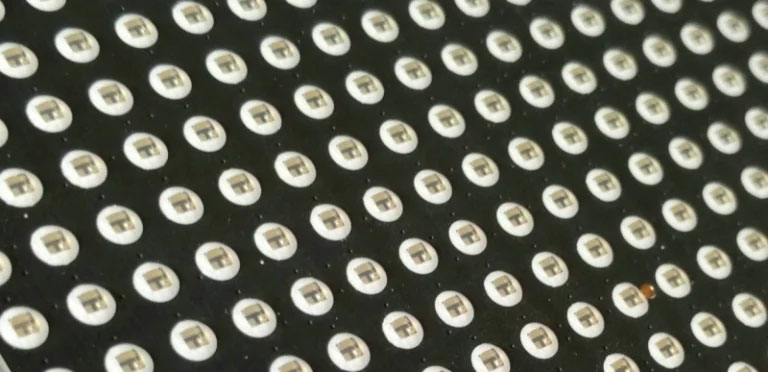

Integrated Matrix Device adopts integrated matrix packaging technology to integrate multiple LED chips in one package, reduce solder joints, and improve reliability.
This technology is an improvement in conquering small pitches.


Glue On Board adopts glue encapsulation technology to encapsulate the LED module as a whole in a transparent colloid to provide an additional layer of protection.
Glue encapsulation provides waterproof, dustproof, and impact-proof protection, suitable for outdoor use.
The encapsulation process reduces the impact of the external environment on the LED and improves the reliability of the module.
Thanks to advances in semiconductor materials and light extraction technology, LED modules offer excellent brightness and low power consumption.
High-quality components and rugged design extend service life to over 50,000 hours. Consistent performance in demanding environments increases reliability in critical applications.
Available in a variety of shapes and sizes, including flexible and transparent options, supporting a variety of applications from architecture to stage design. Suitable for a wide range of commercial LED screen, from indoor displays to large outdoor installations.
The modular design allows for easy expansion and integration into larger systems, supporting small displays to extensive video walls. Seamless integration of various control systems and software platforms enhances functionality.
High-quality LED lamps provide higher brightness and better color consistency, ensuring that the display effect of the module in different applications can meet expectations.
At the same time, raw materials and optimized manufacturing processes can improve the reliability of LED lamps, reduce failure rates, and thus extend the service life of the module.
Thermal conductivity is crucial to the heat dissipation effect of LED modules. High thermal conductivity materials such as aluminum substrates can effectively dissipate heat and prevent performance degradation caused by overheating.
At the same time, precise design and high-standard manufacturing processes can improve the stability of electrical performance.
LINSN LED will select high-performance driver chips to provide stable current output and precise control. In complex application environments, the anti-interference ability of the driver chip is particularly important.
By optimizing circuit design and shielding measures, the anti-interference performance is improved to ensure that the display effect is not affected by electromagnetic interference.
It affects the waterproof, dustproof, and shockproof performance of the LED video wall module. Advanced packaging technology such as GOB (Gel-On-Board) can significantly improve the durability of the module and adapt to a wider range of application environments.
Selecting materials with high light transmittance and aging resistance can reduce light reflection and scattering and improve the overall display effect.
Efficient and stable power supply design can provide continuous and stable current output to ensure the normal operation of the module.
Modern LED modules are often equipped with intelligent power management systems, which provide remote control and automatic adjustment functions to improve the flexibility and ease of use of the system.
The cooling system can extend the service life of the LED module and improve its performance.
High thermal conductivity materials such as aluminum alloy heat sinks and reasonable heat dissipation design ensure that heat is dissipated in time.
Advanced thermal management technologies such as air cooling and liquid cooling can provide better heat dissipation in high power density applications and ensure that the module remains stable when working at high brightness.
LINSN LED always adheres to strict quality control standards to ensure that each LED module meets the highest quality requirements and provides customers with excellent product performance.
Choosing the right LED module requires comprehensive consideration of application requirements and technical parameters:
Understand the requirements and application scenarios: clarify the display environment (indoor LED display or outdoor LED display), display content (text, pictures or videos) and viewing distance requirements to select the appropriate pixel pitch and brightness.
During the production process, by optimizing product design and parameter configuration, the needs of different application scenarios can be met.
Evaluate performance parameters: Check the module’s brightness, contrast, refresh rate, color reproduction and other performance parameters to ensure that they meet the requirements of actual applications.
Features such as high brightness, high resolution and wide viewing angle are essential for different application scenarios.
Evaluate the budget: Choose a cost-effective LED module within the budget to balance performance and cost. Although high-quality LED modules are more expensive, they have higher stability and lower maintenance costs in long-term use.
In addition, it is necessary to consider the initial investment and long-term operating costs to ensure the best display effect within the budget.
If your LED modules are not lighting up, don’t worry! Here’s how to troubleshoot the issue in two straightforward steps:
Follow these steps, and your screen should shine brightly once more.
Here’s how to fix a broken LED lamp:
(1) Power Connection: Insert a power supply cable into the receiving card. Connect one end of a flat cable to port 1 of the receiving card and the other end to the module. Insert another power supply cable into the module.
(2) Testing the Module: Power on the module to light up red, green, blue, and white. Identify the broken lamp.
(3) Removing the Broken Lamp: Use a heat gun set to 100°C-150°C to soften the GoB glue. Carefully scrape off the glue around the broken lamp and remove it.
(4) Installing a New Lamp: Adjust the heat gun to 250°C-300°C. Take a new lamp, dip it in some flux, and install it onto the module using the heat gun. Test the module to ensure the new lamp lights up.
(5) Applying GoB Glue: Use a syringe to apply GoB glue around the new lamp. Cover it with film paper and press firmly. (Tip: If the module surface is frosted, use frosted film paper to cover the lamp.)
(5) Curing the Glue: Shine a UV curing lamp on the lamp for 10 seconds. Continue filling in with GoB glue, cover again with film paper, and press firmly. Shine the UV curing lamp on the lamp for another 10 seconds.
(6)Final Touches: Grind off any excess glue with abrasive paper.
Your repair is now complete!
In some cases, LED modules may not work as expected. Here’s a simple step-by-step guide on how to test and connect an LED module. You can refer to the video below for a more visual explanation of the entire process.
Testing and Connection Steps:
High-quality LED lamp beads, well-designed PCB boards, efficient driver chips and advanced packaging processes ensure the brightness, color consistency and reliability of the LED screen module.
The optimized heat dissipation system and power supply design improve durability and efficiency. These factors ensure the excellent performance of the LED module in various application scenarios and provide stable and high-quality display effects.
Linsn LED Factory Details Display
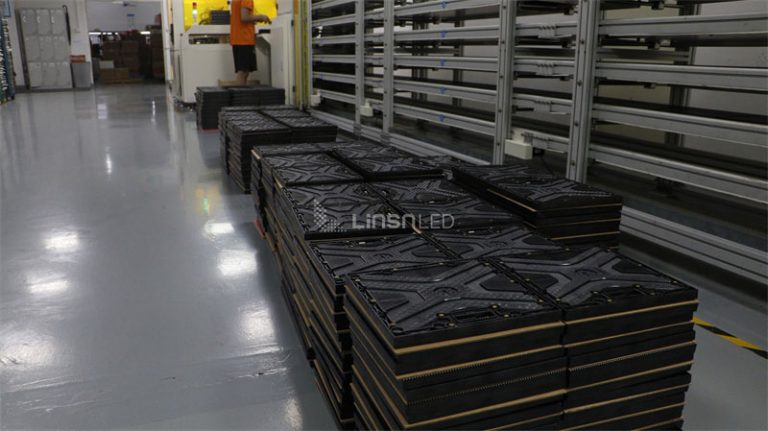


Building 2, Hongfa High-tech Park, Shiyan Street, Baoan District, Shenzhen, China.
Email: sales@linsnled.com
Phone: +86-186-7583-4292
Ⓒ 2010-2026 All Rights Reserved by Shenzhen Linsn LED Co.,Ltd.