

Small LED Display Screen: Compact, High-Brightness Display Solution
In today’s fast-paced digital world, businesses and advertisers need flexible, eye-catching solutions to grab attention.
The small LED display screen is the perfect answer—compact yet powerful, it delivers vibrant and dynamic visuals even in limited spaces.
From retail stores using them for dynamic promotions to outdoor events relying on their waterproof and sun-resistant durability, these screens are transforming the way information is displayed.
Whether you need a window-mounted advertising screen or a small display for an event, they offer high-definition visuals and energy efficiency to meet diverse needs.
Table of Contents
1. What is a Small LED Display Screen?
It is a compact digital display device that uses LED technology, specifically designed for space-constrained environments.
It combines high resolution with flexible deployment capabilities. Its core feature lies in the pixel pitch, which ranges from P1.5 to P4, enabling detailed images even when viewed up close, while also being adaptable to complex indoor and outdoor environments.
This makes it an ideal solution for advertising, retail, events, and other industries.


1.1 Core Technology and Product Features
(1) Pixel Density and Resolution:
Utilizing small-pitch LED technology, such as P1.5 or P2.5 levels, it ensures a high pixel density (e.g., 3840×2160@P1.5), meeting the clarity requirements for close-up viewing scenarios like window displays and corporate showrooms.
(2) Environmental Adaptability:
Outdoor version: Brightness reaches 5000-8000 nits, supports IP65/IP66 protection rating, UV resistance, dust and water resistance, and operates in extreme climates from -30°C to 60°C.
Indoor version: Low power consumption design (≤200W/㎡).
(3) Modular Structure:
Supports customized splicing (e.g., curved or irregular screens), with a lightweight cabinet (single cabinet weight <5kg), making it easy to install quickly on walls, columns, or hanging brackets.
(4) Smart Control:
Supports remote cloud management, allowing for real-time updates of advertising content or data visualization information.
2. Why choose a Small LED Display?
In today’s world, where information dissemination efficiency determines business competitiveness, LED display screen small, with their technological innovations and adaptability to various scenarios, are reshaping the game in advertising, retail, and public displays.
Below are five core dimensions analyzing their irreplaceable competitive advantages:
2.1 Spatial Adaptability
Traditional large screens are limited by spatial layout and installation costs, while small-pitch LED displays, with their flexible design, break through the constraints of physical space, especially excelling in narrow or irregular environments:
(1) Ultra-thin Body: With a minimum thickness of 20mm, it can easily be embedded into storefront windows, counter edges, or column sides, saving space while enhancing the display effect.
(2) Flexible Splicing: Supports irregular splicing such as curved, circular, or wave-shaped configurations, perfectly fitting into irregular spaces like mall atriums, exhibition booths, and display walls, maximizing the use of every inch of space.
(3) Lightweight Structure: Each module weighs less than 3kg, making it easy to hang from ceilings or temporary supports without the need for additional reinforcement of the building’s load-bearing capacity.
2.2 Small Pitch Technology
By adopting small-pitch technology (P1.2-P2.5), it delivers an unparalleled “pixel-perfect” experience:
(1) Pixel Density: For example, a P1.5 screen achieves a pixel density of 440,000 pixels per square meter, providing 4K-level fine details within a 1-meter viewing distance, making it ideal for environments with extremely high detail requirements.
(2) Color Performance: 16-bit grayscale control and 110% NTSC wide color gamut accurately reproduce every detail in luxury textures and art paintings.
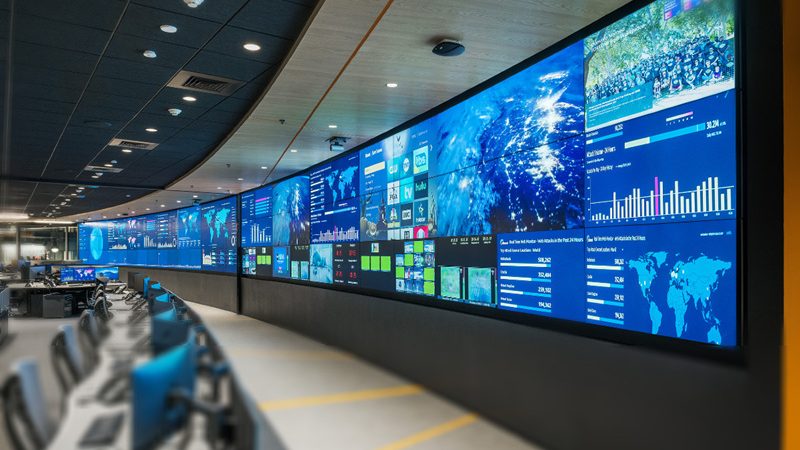
(3) Seamless Display: Frameless module splicing creates a perfect, seamless curved advertising wall or corporate data visualization display, enhancing the immersive experience.
2.3 Energy Efficiency and Cost-effectiveness
From procurement to operation, the display significantly optimizes enterprise investment and reduces long-term operational costs:
(1) Power Consumption Comparison:
LED Screen: Power consumption ≤ 300W per square meter (P2.5 as an example), with an estimated annual electricity cost of around $180 when used for 10 hours per day.
Traditional LCD: Power consumption ≥ 600W for the same size, with an estimated annual electricity cost of over $360.
(2) Lifespan Advantage: LED lamp beads have a lifespan of up to 100,000 hours (approximately 11 years), more than three times longer than the 30,000-hour lifespan of LCD backlighting, reducing replacement frequency.
(3) Zero Replacement Cost: Dynamic content can be updated at any time, eliminating the need for frequent poster or advertisement material replacements, saving both material and labor costs.
2.4 Outdoor Durability
Designed with exceptional durability and resilience to withstand harsh environments:
(1) Brightness and Protection: With brightness ranging from 5000 to 8000 nits, it remains clearly visible even under direct midday sunlight, meeting the demands of all-weather outdoor advertising.
(2) IP65 Waterproof and Dustproof: The corrosion-resistant aluminum alloy casing can endure heavy rain, sand, salt mist, and other natural elements, ensuring stable operation of the display.
(3) Temperature Control System: Supports wide temperature range operation (-30°C to +60°C) with built-in smart cooling fans and heating film, ensuring stable performance even in extreme cold or high-temperature conditions.
2.5 Smart Features
It’s not just a display tool, but also a smart advertising and data transmission hub:
(1) Remote Cluster Management:
Real-time synchronization of ad content or urgent notifications, enabling efficient cross-region operation and management.
(2) Data-Driven Advertising:
Through integration with smart cameras and data analytics systems, the LED display can analyze audience behavior in real-time, enabling intelligent scheduling and switching of ad content.
(3) Multi-System Integration:
Supports integration with other public service systems (e.g., smart city management platforms), enabling intelligent applications for city management, event coordination, and more.

3. Top Applications of Small LED Display Board
The following outlines six core application areas based on technological advantages and scenario requirements, helping you unlock potential commercial value.
3.1 Retail Spaces
(1) Advertising Small LED Display Screen: Using P1.8-P2.5 small-pitch screens to display promotional videos in limited window spaces, supporting split-screen displays of product details and countdowns for discounts, enhancing in-store conversion rates.
(2) Electronic Price Tag System: Ultra-thin LED panel (thickness ≤ 5mm) replace traditional paper labels, with cloud-based synchronization for real-time price adjustments, reducing manual maintenance costs.


3.2 Events and Exhibitions
(1) Stage Backdrops: Curved or custom-shaped LED products seamlessly stitched together to create a panoramic visual effect, supporting high dynamic range imaging, and suitable for high-profile events like concerts and press conferences.
(2) Temporary Booths: Quick-install LED panels that can be assembled within 2 hours, reusable to reduce exhibition setup costs.

3.3 Public Transportation
(1) Platform Information Display: IP65-rated P3-P4 LED screens that reliably display schedules, delay alerts, and emergency notifications in environments ranging from -30°C to 60°C, reducing reliance on manual announcements.
(2) Charging Station Advertising System: Charging stations equipped with 24-inch LED screens that display nearby restaurant and hotel ads based on charging duration, with daily exposure exceeding 500 times per screen.
(3) Smart Parking Guidance: LED vacancy display screens installed at parking lot entrances, integrated with license plate recognition systems, reducing vehicle cruising time by 40%.


3.4 Corporate Offices
(1) Brand Culture Wall: High-resolution LED walls (P2.0 and below) continuously display the company’s history, patent achievements, or real-time business data, enhancing the first impression for visitors.
(2) Smart Conference System: 4K integrated video conference LED display solutions that support multi-source switching (HDMI/USB-C), improving collaboration efficiency.
(3) Production Display Board: LED screens embedded in production areas to display real-time data on product yield rates and order progress, combined with audio-visual alarms for abnormal workstations.
3.5 Public Services
(1) Government Information Display: Community service centers deploy double-sided LED screens to simultaneously display policy interpretations, appointment queue calls, and public service advertisements, enhancing government service efficiency.
(2) Emergency Warning System: High-brightness 5000-nit screens that remain clearly visible in bright environments, used to broadcast emergency evacuation instructions during events like typhoons or fires.
(3) Convenience Service Terminals: Outdoor screens with touch functionality providing public transportation queries, map navigation, and payment services, reducing pressure on manual service windows.
3.6 Cultural and Tourism Innovation
(1) Digital Tour Guide System: LED screens at scenic area entrances dynamically display tour routes and heat maps of visitor flow, reducing paper map usage.
(2) Light and Shadow Themed Exhibitions: Flexible LED screen used to create immersive scenes such as circular tunnels and starry sky domes, offering unforgettable experiences.
(3) Cultural IP Activation: Museums embed LED screens next to exhibit cases, displaying historical restoration animations to increase youth engagement and enhance educational and cultural outreach.

4. Why are Our LED Screens Smarter than Traditional Billboards?
Traditional advertising screens only display static content, while smart LED streetlight screens integrated with IoT technology enable the following intelligent interactions:
4.1 Remote Management
(1) Mobile/Computer Control: Through 4G/5G connectivity or network cables, you can change ads and set playback schedules from anywhere via the cloud platform.
(2) Synchronized Playback: Supports multi-screen synchronized playback. By integrating GPS and RF modules, multiple displays can be managed simultaneously, providing a more dynamic and interactive advertising experience.
(3) Timed On/Off: Set automatic on/off schedules (e.g., ads play during business hours and turn off after hours) to avoid wasting electricity by forgetting to turn off the screens.

4.2 Energy-Efficient & Durable: Long-Term Cost Savings
Long Lifespan: High-quality LED chips last 5-8 years, which is more cost-effective than frequently replacing traditional posters.
5. How to Choose the Most Suitable Small LED Display Panel?
5.1 Pixel Pitch
Pixel pitch directly affects the image detail. Small LED screen display with P1.2 to P1.8 specifications can display smartphone-like clarity at a distance of 0.5 meters, making them perfect for high-end jewelry counters and product experience areas.
P2.5 specifications, on the other hand, are the ideal choice for store windows, maintaining 1080p clarity even at a 2-meter distance.
5.2 Brightness Selection
For indoor environments, a screen with 300-800 nits of brightness is sufficient.
However, small outdoor LED displays need a brightness of 5000 nits or more to remain clearly visible in direct sunlight.
For semi-outdoor settings like cafes, we recommend a middle-ground solution with 1500-3000 nits.
5.3 Installation Method Selection
Wall-mounted installations save space and are ideal for store wall displays.
Stand-mounted designs allow for easy position adjustments, catering to temporary event needs.
Embedded solutions create a high-end visual effect, making them perfect for corporate showrooms. A professional installation team can provide customized solutions.

6. FAQs
Q1: What is the difference between P2.5 and P4 displays?
A: The P2.5 display has 160,000 pixels per square meter, suitable for a viewing distance of 1.5-3 meters; the P4 display has 62,500 pixels per square meter, suitable for a viewing distance of 3-5 meters. The former offers higher clarity.
Q2: Why does an outdoor screen need 5000 nits brightness?
A: In direct sunlight, ordinary screens tend to “disappear” in the strong light. 5000 nits is equivalent to 10 times the brightness of an average smartphone, ensuring it remains clearly visible even under midday sun.
Q3: What does a 3840Hz refresh rate mean?
A: It means the screen updates 3840 times per second. Ordinary TVs typically have 60Hz. A higher refresh rate helps avoid the “banding” effect when capturing the screen with a smartphone.
Q4: How much space should be reserved for installation?
A: For wall-mounted installations, reserve 10cm for heat dissipation; for embedded installations, the frame should be 5mm larger than the screen size; for pillar installations, consider a 1:3 stability ratio.
Q5: How should the display be maintained regularly?
A: Clean the surface weekly with a dedicated cleaning solution; check connection cables monthly; perform professional dusting every quarter.
Q6: How to troubleshoot a black screen?
A: First, check the power indicator light → confirm the signal source input → restart the control system. 90% of issues can be resolved with these three steps. If the problem persists, contact 24-hour technical support.
Q7: How to assess the quality of the screen?
A: 1. Check if the grayscale transition is smooth (16bit or higher); 2. Check for uniformity of white color (difference ≤5%); 3. Check the seam gaps (≤1mm); 4. Check the manufacturer’s certification.
Q8: Why is there such a big price difference?
A: The main differences lie in: ① LED chip brand ② Quality of the driving IC ③ Heat dissipation system design ④ Warranty period.
7. Conclusion
Our small LED display screen incorporate industry-leading pixel pitch technology, excellent environmental adaptability, and innovative smart management.
Whether you are a retailer looking to enhance brand image, a business manager needing efficient information display, or a planner creating smart city services, we can provide customized display solutions tailored to your needs.
Recommend


Contact Us
Send us a message at any time if you have any problems or quotes, and our professional team will reach out you in 24 hours.
