1. What Are LED Wall Panels?
2. LED Wall Panel vs Other Video Wall Options
3. Top Use Cases for LED Wall Panels
3.1 Stage Performances & Large-Scale Events
3.2 Churches & Religious Venues
3.3 Commercial Advertising & Retail Spaces
3.4 Control Rooms & Conference Centers
3.5 Exhibitions & Museum Displays
4. LED Wall Rental: When Does It Make Sense?
5. How Much Does an LED Wall Panel Cost?
6. How to Choose the Right LED Wall Panels?
7. Real LED Panel Wall Projects
8. Conclusion
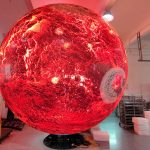
LED wall panels are modular displays unit made up of thousands of tiny LED lights, with each pixel individually controlled to produce dynamic visual content.
These units can be seamlessly tiled together—like building blocks—to create large-format video walls of any scale, commonly used in concerts, exhibitions, retail storefronts, and other high-impact environments.

Compared to traditional LCD video walls, they offer higher brightness, wider viewing angles, and a truly borderless display—ideal for expansive spaces and long-distance viewing.
The core principle behind an LED panel is based on RGB (red, green, blue) light-emitting diodes.
By adjusting the brightness of each pixel, the system can reproduce a full spectrum of colors.
Multiple modules are connected through a dedicated control system to present synchronized, fluid imagery across the entire surface.
For example, the stunning digital backdrop you see at a major concert is typically built by seamlessly joining multiple LED panels.
When choosing a video wall solution, the most common options include LED video walls, LCD splicing displays, and traditional projection systems.
For a more in-depth breakdown of how LED and LCD displays differ in brightness, durability, cost, and long-term ROI, check out our full LED Screen vs LCD Screen comparison guide.
Below is a brief comparison of how these technologies perform in real-world applications:
Modular LED systems offer truly seamless splicing between panels.
This creates a continuous image with no visible breaks—ideal for full-screen video playback, dynamic advertising, or immersive visual content.
In contrast, traditional LCD screen have physical bezels (typically 3–5mm) between each screen, which can disrupt the visual flow.
Projectors rely entirely on a flat projection surface and struggle to deliver ultra-wide, uninterrupted displays.


LED seamless wall vs. LCD wall
LED video walls use self-emitting light technology, delivering brightness levels ranging from 800 to 5,000 nits.
This ensures sharp, vibrant images even under direct sunlight or intense stage lighting, making them highly resistant to ambient light interference.
Projectors, on the other hand, depend on reflected light and often struggle in well-lit environments—especially during daytime use.
While LCDs offer decent brightness, they typically fall short of LED in terms of sustained clarity, color consistency, and wide-angle visibility.


LED video walls vs. Projectors
LED screens support a wide range of installation methods—wall-mounted, floor-standing, suspended, curved configurations, and more.
Their modular nature allows for customized sizing and shapes, making them suitable for diverse settings like churches, stages, conference halls, and retail storefronts.
In contrast, projection systems are limited by throw distance, ambient light interference, and screen surface quality, which often restrict their adaptability.
LCD video walls, while effective in standard layouts, are less suited for creative or large-scale custom installations.
Feature | LED Wall Panels | LCD Video Walls | Projection Systems |
Visual Quality | High brightness, seamless display | Visible bezels | Relies on ambient light |
Viewing Distance | Stays sharp even from afar | Clear at mid-range | Degrades in bright light |
Lifespan | ≥100,000 hours | 30,000–50,000 hours | Shorter lamp life |
Installation Flexibility | Modular, customizable layouts | Fixed-size panels, limited expansion | Requires ample space and screen |
Cost | Higher upfront, better long-term value | Moderate | Lower initial cost, higher maintenance |
Best Use Cases | Stages, shopping malls, churches, advertising | Meeting rooms, classrooms | Small-scale or temporary use |
With flexible scalability, high brightness, and reliable maintainability, LED screens play a key role across various industries.
Below are some of the most common and effective use cases:
LED wall panels are widely used as center-stage backdrops, side extensions, or immersive visual elements during concerts, corporate events, product launches, and more.
A typical layout includes a three-screen configuration: a main central screen for video playback, with side panels for synchronized visual effects.
Many event production companies prefer LED wall rental solutions due to fast setup, easy teardown, and adaptability to different stage designs and venues.

In churches and places of worship, LED screens are used to display sermons, lyrics, and multi-camera live feeds—especially valuable during large gatherings or live-streamed services.
Compared to traditional projectors or LCD walls, LED panels for wall maintain high visibility even in large, brightly lit spaces and eliminate issues caused by projector shadows or viewing obstructions.

LED panels for video wall are commonly used in shopping malls, flagship stores, airports, and storefront windows to display promotional videos, social media content, or interactive marketing triggered by sensors.
Short-term LED wall rentals also offer a flexible solution for seasonal campaigns and holiday promotions, allowing for fast deployment and quick content updates.

In transportation hubs, security monitoring centers, and enterprise multimedia rooms, LED displays provide centralized visualization of high-resolution video feeds, real-time data, and multiple signal sources.
Compared to LCD video walls, LED panels offer seamless splicing with no visible bezels, resulting in a cleaner and more cohesive display—crucial for decision-making environments.

At trade shows and exhibitions, LED walls are often used as dynamic brand backdrops, interactive content displays, or digital signage for crowd guidance.
Thanks to their modular design, panels can be quickly adjusted to fit different booth sizes—ideal for temporary installations.
In museums and science centers, LED panels enhance visitor engagement by showcasing artifact details in ultra-high resolution or playing immersive educational videos.

Not every LED display project requires a full purchase.
In fact, for many short-term events, one-off installations, or budget-constrained scenarios, LED wall rental offers a more flexible and cost-effective solution.


(1) Temporary events or performances: Corporate annual meetings, outdoor roadshows, holiday campaigns, and product launches.
(2) Exhibitions or trade shows: Ideal for short-term installations that need to be dismantled immediately after the event.
(3) First-time users or trial projects: Clients unfamiliar with LED display performance can rent a system before committing to a full purchase.
(4) Projects with tight timelines and limited budgets: Rental LED display allows for staged investment without requiring full upfront capital.
If your project is short-term, fast-paced, or you’re still unsure about long-term use, renting an LED wall is a smart and low-risk way to start.


(1) Fast response to on-site needs: Most rental services include professional installation and teardown, saving setup time and reducing logistical complexity.
(2) No technical burden: You don’t need an in-house team to manage LED control systems—technical support is handled by the service provider.
(3) Flexible adaptation to different venues: A wide variety of rental panel sizes and formats are available, suitable for different booth layouts or stage structures.
(4) Budget control: Rentals are typically charged by day or per project, allowing for more flexible budgeting without the upfront cost of equipment and staffing.
(1) Long-term fixed installations: For permanent setups like shopping malls or churches, purchasing is often more cost-effective than long-term rental.
(2) Projects with strict brand consistency requirements: Rental panels may come from mixed production batches, leading to slight visual differences.
(3) Custom dimensions or irregular screen shapes: Most rental panels follow standard module sizes and may not support special design requests.


If you’re considering purchasing or renting an LED wall, you’ve likely asked:
“How much does it cost per square meter?”
“Why do prices vary so much between suppliers?”
These questions are common—and for good reason.
LED wall panels are not off-the-shelf products, but customized display systems tailored to specific use cases.
That said, we can still provide useful reference points. Let’s break it down from two angles:
1) what goes into the cost, and 2) typical price ranges in real-world scenarios.
Component | Description |
LED panels (modules + cabinets) | The largest cost driver. Prices vary significantly by pixel pitch—for example, P2.5 vs. P1.25 may differ by nearly 2×. |
Control system | Includes sending/receiving cards, video processors, and sometimes color calibration units. Some setups can use simplified systems; others require advanced configurations. |
Mounting & structural parts | Frames, rigging systems, wiring, power distribution boxes, etc. For outdoor projects, waterproofing and wind resistance must be factored in. |
Logistics & installation | Especially in rental projects, these costs are often separated out and quoted independently. |
After-sales support / Warranty | Some brands charge annually; others bundle warranty and support into the initial price. It’s important to clarify this in advance. |
To help you build a realistic budget quickly, here are estimated average price ranges for common LED display scenarios.
(Prices include LED panels, control systems, and basic installation. Taxes not included.)
Application Scenario | Common Pixel Pitch | Price Range (USD/m²) | Notes |
Retail storefronts (indoor) | P2.5 – P3.9 | $1,200 – $1,800 | Depends on screen size and whether custom-shaped panels are required. |
Stage events / trade show rental (indoor) | P2.6 – P3.9 | $900 – $1,600 | Pricing varies with rental duration, transport, and installation method. |
Outdoor advertising / stadiums | P3.9 – P6.6 | $950 – $1,500 | Outdoor LED displays require higher brightness and more complex structures. |
Control rooms / command centers / broadcast | P1.25 or finer | $2,500 – $4,000 | Typically requires high grayscale, high refresh rate, and color calibration. |
Churches / places of worship (fixed install) | P2.5 | $1,500 – $2,200 | Brightness and wide viewing angles are key; budgets often include AV system integration. |
⚠️ Note: Market prices like “$800/m²” often refer to the bare LED panel only.
They exclude essential components such as control systems, structural parts, and service fees.
Final installed costs are typically 30–50% higher than raw panel prices.
LED displays are custom-engineered systems, not off-the-shelf products. Pricing depends on a combination of interrelated factors, such as:
(1) Project size: For the same pixel pitch (e.g., P2.5), a 50 m² setup may cost 20–30% less per square meter than a 5 m² installation.
(2) Installation method: Wall-mounted, suspended, column-based, or freestanding structures all vary in complexity, materials, and labor cost.
(3) System configuration: Does the setup include video processors, multi-channel signal inputs, or remote diagnostics support?
(4) Component specifications: Cabinet material, power supply quality, cable grade, and module protection level (e.g., GOB or conformal coating) affect durability and pricing.
(5) Delivery model: Are on-site installation, system calibration, training, and handover documentation included?
(6) Location-based variables: Transport and installation labor costs vary significantly by region or country.
There’s no “standard price” because there’s no standard use case.
Asking for an average price without context often leads to inaccurate budgeting—and may compromise final delivery quality.
A truly cost-effective LED wall is one that remains stable, serviceable, and visually consistent for 3–5 years with minimal downtime.
Key evaluation points include:
Whether the display performance meets standards (refresh rate, brightness uniformity, color calibration).
Whether the structure and modules are designed for easy installation and maintenance (e.g., front service access).
Whether the brand is backed by a professional support team offering timely debugging, warranty service, and system updates.
Question: How far is your typical viewing distance?
Recommendations:
<1.5 m → Choose P1.2 or finer (close-range viewing, museums, galleries)
2–4 m → Choose P1.5–P2.5 (meeting rooms, churches, retail)
4–8 m → Choose P2.5–P3.9 (mall signage, small stages)
>8 m → Choose P4.8+ (outdoor ads, stadium displays)
Tip (optional):
A common rule of thumb: Viewing distance ÷ 1.5 ≈ suitable pixel pitch.

Question: How will the LED wall be installed?
Recommendations:
Wall-mounted → Front-service / slim aluminum cabinets
Hanging / Rental use → Lightweight die-cast rental cabinets (fast setup, durable)
Freestanding / Outdoor → Reinforced iron cabinets (strong structure, weatherproof)
Curved / Custom setups → Curved-compatible or custom-size modules
Tip (optional):
Front service reduces space requirements; rental cabinets focus on quick assembly and robustness.


Front-access Panels
Rear-access Panels
Question: Will it be used indoors or outdoors?
Recommendations:
Indoor → 800–1,600 nits, SMD or GOB (if touching risk exists)
Semi-outdoor / Window displays → 1,600–3,000 nits, enhanced moisture protection
Outdoor (full weather exposure) → 4,000–6,000 nits, IP65+, sealed structure (GOB / conformal coating)
Tip (optional):
Brightness ensures visibility; IP rating ensures long-term reliability.

Question: What type of content will you display most?
Recommendations:
Text / Data → Prioritize high contrast & clarity; standard refresh rate is enough
Videos / Animations → ≥3840Hz refresh rate, high grayscale (14-bit+)
Camera / Live broadcasting → High refresh (≥3840Hz) + high-gray IC (e.g., ICN2153)
Sports / Fast motion → Low latency + high refresh rate
Tip (optional):
If your screen will appear on camera, refresh rate and grayscale matter more than pixel pitch.
Question: How long will the screen run each day?
Recommendations:
Occasional use / Rental events → Rental cabinets with anti-collision design
4–12 hours daily → Standard SMD modules, quality power supply
24/7 continuous operation → GOB / full protection, upgraded power module, spare parts strategy
Tip (optional):
High-duty usage benefits from extra protection and higher-grade components to ensure long-term stability.
Based on your requirements, we can match several suitable LED panel options from our product lineup.
Share your project size or installation photos, and we’ll help you finalize the most cost-effective configuration.
Below are three actual installations across Europe, Africa, and Asia—each featuring a tailored LED wall solution designed by Linsn LED based on unique on-site requirements.
Germany · EV960 P6.67 Outdoor Display (Fixed Installation)
Model: EV960 Series / P6.67 / Outdoor Iron Cabinet
Screen Size: 3.84m × 2.88m × 2 units (Approx. 22.1㎡ total)
Application: Outdoor building façade for year-round advertising display.
Key Features:
High brightness (6000 nits) + 3840Hz refresh rate for clear visibility in all weather conditions
Fully sealed aluminum chassis with dual-side maintenance support
BTB hard connectors replace traditional flat cables, improving stability and waterproof performance
Stable performance after power-up and fast control response; client provided positive feedback
Application Fit Insight:
This project prioritized durability and energy efficiency in outdoor environments with frequent rain, snow, and wind.
The EV960’s common cathode energy-saving design and aluminum heat dissipation structure significantly reduce power consumption and surface temperature—ideal for the variable climate in Germany

Customer Review Germany P6.67 Display Project
MA960 P2.5 Indoor LED Wall for Church (Fixed Installation)
Model: MA960 Pro / P2.5 / Indoor
Application: Main display wall in a church, used for sermon content, lyrics, and live camera feed
Key Features:
Precision magnesium-aluminum cabinet (960×960mm) ensures a flat, seamless visual surface
Standardized 320×160mm LED modules support quick replacement and future expansion
High refresh rate and ICN2153 grayscale IC deliver flicker-free performance—perfect for live streaming and camera work
Quick installation with clean wiring; system has been running stably with positive user feedback
Application Fit Insight:
Religious venues often require clear visuals with soft brightness and high camera compatibility—yet are typically operated by non-technical staff.
The MA960 P2.5, paired with high-gray ICs, ensures both visual performance and long-term ease of use, making it ideal for consistent playback and simplified maintenance.

Client Feedback Nigeria MA960 Series
South Korea · P2.5 Indoor LED Wall for Corporate Meeting Room
Control System: Colorlight 5A-75E receiving card
Display Size: 4480mm × 2560mm (Approx. 11.47㎡)
Application: Corporate meeting room & multimedia center for daily data visualization and video conferencing
Key Features:
High-contrast LEDs enhance sharpness and image clarity, even in text-heavy content
ICN2153 driver chip delivers high refresh rate and rich grayscale for smooth, flicker-free visuals
Integrated with HD receiving cards supporting multi-signal input and flexible screen partitioning
Remote configuration and calibration supported; client feedback highlighted excellent image quality and system responsiveness
Application Fit Insight:
Corporate meeting environments require high-resolution, color-consistent, and responsive displays for close-range viewing.
By combining all-black LED diodes with premium driver ICs, this P2.5 setup delivers detail and clarity comparable to LCD screens—while maintaining system stability at larger sizes.
OLED excels in home entertainment with its high contrast and soft lighting.
However, issues like screen burn-in, shorter lifespan, and complex maintenance hinder its use in commercial and long-duration applications.
Narrow-pitch LED displays also feature self-emissive technology and rich color reproduction, but with greater durability, lower risk of burn-in, and front-access maintenance.
The hot-swappable modular design further reduces upkeep costs, making LED a more reliable choice for commercial display environments.
LED wall panels are not off-the-shelf commodities, but highly customizable visual systems tailored to specific environments and use cases.
They are ideal for projects that require:
Large-format, seamless displays with immersive visual impact
Mid-to-long viewing distances such as in concerts, public squares, exhibition halls, or churches
Temporary installations or retail activations needing rapid deployment and flexible configuration
Brand-driven or content-heavy spaces focused on visual storytelling and audience engagement
Need guidance on your project?
We’re here to help with:
Contact us today with your project requirements, and we’ll provide a tailored LED display proposal.
Send us a message at any time if you have any problems or quotes, and our professional team will reach out you in 24 hours.
Building 2, Hongfa High-tech Park, Shiyan Street, Baoan District, Shenzhen, China.
Email: sales@linsnled.com
Phone: +86-186-7583-4292
Ⓒ 2010-2026 All Rights Reserved by Shenzhen Linsn LED Co.,Ltd.