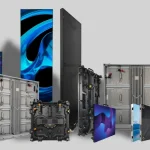

5 Things You Need to Know about LED Backdrop Design
How to make your stage backdrop to merge with the stage performance? And how to achieve the different specific performance contexts to switch seamlessly?
Choosing the right LED backdrop design can feel overwhelming, but a few guidelines make the process easier.
With the ongoing development of LED display technology, the LED wall backdrop design has become more and more designers’ first choice.
It can seamlessly switch between different content, long-time work, and display better visual effects to improve influence for your stage design.
Table of Contents
1. What Is the LED Backdrop Design?
LED backdrops can transform stages into dynamic visual experience using high-resolution screens to display immersive content.
Whether for concerts, corporate events, or theater productions, it seamlessly switches scenes—from realistic landscapes to abstract animations—enhancing audience engagement. Key benefits include:
- Real-time content updates
- Adaptability to any theme
- Superior brightness and contrast compared to traditional props
Linsn LED rental LED display, uses modular design, is easy to install and transport, highly customized sizes, display contents, and shapes, and can be used for various stage activities.


2. 13 Basic Factors of LED Backdrop for All Stage Designs
(1) Resolution
The resolution of the stage background LED display usually touches on the number of pixels on LED monitors and arrangement.
It is used to describe the display capability, and the common resolution including 720P, 1080P, 2K, and 4K.
For example, 720P pertains to having 1280*720 pixels on the panel while the 1080P points to have 1920*1080 pixels.
The higher the resolution, the display images will be more delicate, clearer.
Moreover, almost all news will tell you to choose a backdrop LED wall stage design with high resolution.
However, it is not a golden rule for you. Because the lower-resolution LED panels may be a better choice when needed to show certain aesthetic or stylistic designs.
So, we also recommend choosing the most advantageous solution based on the needs of the stage.


(2) Pixel Pitch
The pixel pitch denotes the distance between two neighboring pixel centers, so it also can be called point pitch.
The suitable pixel pitch is also one of the key factors to influence display effects when choosing LED monitor.
If the pixel pitch you choose is smaller than the appropriate pixel pitch, moiré effect will occur.
Moiré effect means that when the pixel spacing is too small and interference patterns appear on the screen, strange textures will appear on the LED display and lead to image distortion.
The picture resolution or aspect ratio that an LED background wall can display is usually specific.
Therefore, when the pixel spacing is not appropriate, the displayed content will also be distorted as the processor attempts to scale the content.
(3) Dimensions and Aspect Ratio
The size implies the physical size of LED screen while the aspect ratio refers to the ratio of monitor width to height.
In other words, you can think of the size of a monitor as the area it covers, and the aspect ratio as its “shape.”
Common LED display aspect ratios are: 21:9, 16:9, 4:3.
The size and aspect ratio will also affect the visual effect of the LED display in some aspects.
For example, if 16:9 formatted content is placed in a 4:3 LED display panel, the comfort of the picture will be greatly reduced.
Therefore, when designing the LED display background wall, these influencing factors should also be taken into consideration.
(4) Viewing Angle & Viewing Distance
The viewing angle and distance will affect the clarity of the display content that the audience can see.
The LED background wall can be divided into wide viewing angle and narrow viewing angle.
The former means that the content presented on its background LED display wall can be clearly seen from all angles.
The Linsn-LED LED display has an ultra-wide viewing angle, up to 160⁰, creating a good visual effect.
On the contrary, narrow viewing angle means limiting the viewing angle. The same goes for viewing distance.
In order to solve this problem, you can also choose a curved LED display as a solution to adapt to various viewing angles of the venue.


(5) Display Color
There are various types of LED color displays on the market today, such as full-color LED displays, monochrome LED displays, and multi-color LED displays.
Full color can also be called RGB. Based on the three primary colors: red, green and blue, the full-color LED display can display more than 16 million colors.
A monochrome LED display is an LED display that displays one color, which can be a single red or blue, or even white.
Multi-color LED display is an improved version of RGB, which can have additional colors, such as white, to get more color range.
LED color plays a key role in the vividness, contrast and brightness of displayed content.
It is obvious from these types that full-color displays are most suitable for LED background wall design.
RGB offers a wide range of colors, ensuring that various types of content are displayed with high color accuracy.


(6) Brightness and Contrast
Brightness indicates the luminous intensity per unit area, and contrast refers to the ratio of the maximum brightness to the background brightness in a certain environment.
These two factors will affect the overall legibility of the displayed content.
Outdoors where natural light is relatively strong, LED screens need to have higher brightness to ensure normal display of content.
Certainly, you also need to learn to the factors of brightness and contrast to help you choose a more suitable LED backdrop stage design.
These factors include: LED drive, LED panel quality, setup and calibration, LED technology, backlighting, and application environment.
(7) IP Level
The IP protection level consists of two numbers, the first number represents the dustproof level, and the second number represents the waterproof level.
The dustproof level ranges from 0-6, and the waterproof level ranges from 0-8. The larger the number, the higher the protection level.
IP rating considerations depend on the environment in which the LED background wall is used. If it is used in an outdoor environment, a high-protection LED display screen must be used, at least IP65 or above.
If your events at outdoor, you may want to know: Outdoor LED Display
(8) Panel & Module Quality
The LED panel and module quality also affect the display effects and operating hours of stage LED screen design.
Linsn-LED LED rental screen use high-quality LED module and chips to create high-quality LED monitors to meet various application needs.
(9) Installation Method
Frame and method for mounting LED panels ensuring stability and alignment.
Includes rigging considerations for wall-mounted installations, free-standing structures, and suspended installations.
(10) LED Dimming
Dimming refers to the ability to adjust the intensity of light emitted by an LED.
This light intensity controls the brightness of the LED panels. Most modern LED displays support dimming, which can be beneficial.
Automatically adjust brightness according to different environments to ensure normal display of content and excellent visual experience.
(11) Refresh Rate
The number of display updates per second, in Hertz (Hz).
Higher refresh rates result in smoother motion and less flicker, which is important for video content.
(13) Control System
Hardware and software to manage content displayed on LED walls.
Includes processors, controllers, and user interfaces for content creation and scheduling.
(13) Power and Management
Ensure that the LED wall receives sufficient and stable power. Includes power distribution units and backup systems to protect against power outages.
3. LED Wall Backdrop Design Best Ideas
It may make you to be your wits end that choose LED backdrop design for your next event.
But it doesn’t matter, you can speed up the process by some guides.
Here is a list of creative and impactful designs you can use depending on your event.
(1) Dynamic Content Integration
Animated graphics: Use motion graphics to create dynamic and engaging backgrounds that can be customized for different events or themes.
Video loops: Incorporate seamless video loops to enhance the mood, such as flowing water, abstract patterns, or animated textures.
(2) Interactive Elements
Touch-sensitive areas: Integrate touch-sensitive areas on LED walls to enable interactive experiences such as gaming or information retrieval.
Real-time social media feeds: Show real-time social media interactions related to your campaign or brand, such as Twitter feeds or Instagram posts.


(3) Theme Design
Branded content: Design your stage LED backdrop to be consistent with the branding of your event or company, incorporating your logo, brand colors, and slogans.
Seasonal themes: Create designs that reflect seasonal events or holidays, such as a winter wonderland, spring flowers, or holiday decorations.


(4) High Resolution Images
Use high-resolution images and videos to showcase products, landscapes, or artistic visuals. Make sure the content is optimized for the resolution of the LED wall rental.
(5) 3D Visual Effects
Depth illusion: Utilize 3D effects and depth illusion technology to make content appear more realistic and immersive.
Augmented Reality (AR): Combine LED backdrop design with AR elements to create an interactive and visually stunning experience.
(6) Customizable Layout
Modular panels: Design an LED wall with modular panels that can be rearranged to fit different sizes and shapes, providing versatility for a variety of events.
Split Screen: Use an LED video wall to display multiple content streams simultaneously, such as live video, presentations, and graphics.
(7) Lighting Integration
Synchronize with ambient lighting: Coordinate the visual impact of your backdrop LED screen with surrounding lighting effects to create a cohesive and immersive environment.
Color matching: Adjust the color of the LED background wall to match the theme or atmosphere of the event and enhance the overall aesthetic.
(8) Sound and Visual Synchronization
Audio-visual shows: Synchronize LED wall content with music or sound effects to create engaging audio-visual shows.
Live performances: Use large LED screen rental as a backdrop for live performances to enhance the experience with synchronized visuals.
(9) Event Specific Content
Custom animations: Develop custom animations suitable for specific events such as product launches, conferences, or weddings.
Real-time updates: Incorporate real-time data and updates, such as event schedules, speaker information, or live polls.

(10) Minimalist Design
Sometimes less is more. Use minimalist designs, clean lines, and simple animations to create elegant and sophisticated backgrounds.
(11) Storytelling Visuals
Narrative content: Design visuals that tell a story or convey a message, taking the audience on a visual journey.
Sequential display: Use an large LED display panel to display a series of images or videos in a logical sequence to enhance storytelling.


These ideas can help create an engaging, visually appealing LED wall backdrop that enhances the audience and participant experience, making the event memorable and impactful.
4. 6 Skills of LED Backdrop Stage Design
(1) Supplier Selection
The services and products provided by different suppliers will be different, and of course the prices will also be different.
As a result, when choosing an LED display, the choice of supplier is also very important, because it will directly affect your shopping experience and subsequent use experience.
When choosing a supplier, you need to follow the following principles:
Each supplier has its own product type that it specializes in.
For example, a supplier that is very good in the outdoor LED display type may not necessarily be equally good in the indoor LED display type.
Then, you need to determine the type of LED product you need, and then look for a professional supplier in this product type.
When choosing a supplier, check the supplier’s qualifications, reputation and what other consumers have said about it.
Before making a decision, please visit the supplier’s factory to view their products and production processes.
Each link can require suppliers to provide product videos to ensure that each link is carried out perfectly.
Please avoid choosing a supplier whose price is much lower than the market price to ward off encountering inferior services and products.
(2) Maintain Design Consistency
The LED video background wall design is required to be consistent with the other elements of the stage to bring better visual effects.
(3) Use Quality Assets
Investing in quality texts, graphic design, and talent should be a priority.
The quality of these resources will seriously impact the impression your background makes on your audience.
(4) Test
Before the event begins, you need to test the equipment on-site to avoid errors at the event as much as possible.
Of course, the display effect of the LED backdrop design should also be tested in advance to eliminate possible faults and ensure the best visual effect during the event.
(5) Environmental Considerations
The factors to consider will vary in different circumstances.
If the event is held outdoors, a stage LED display backdrop design with high protection level and high brightness needs to be used.
Ensure response to complex changes in the outdoor environment and normal display of content.
(6) Budget
Whether renting or buying, the price of LED displays will be affected by multiple factors.
Therefore, a reasonable budget will not only allow you to advance the project more smoothly but also help you save a certain amount of time.
5. How Much Does the Backdrop LED Design Cost?
(1) How Is the Price Calculated?
The cost of LED backdrop wall design is composed of several parts: LED display price, installation cost, transportation cost and subsequent maintenance cost.
And these costs will also vary due to different influencing factors.
In consequence, you will find that few suppliers online are willing to list their prices.
But that’s okay, you can still figure out a ballpark price by understanding a few key factors.
Or you can use a simpler and more direct way: contact us to get detailed prices and professional solutions.
(2) Factors Affecting Price
LED Type
Outdoor LED display is typically more expensive because they require higher brightness, weather resistance, and durability.
SMD & DIP
Surface mount device (SMD) LED monitors are commonly used in indoor displays and offer better color accuracy.
But may be more expensive than the dual in-line package (DIP) LED panels used in some outdoor displays.
Customizable Shape and Size
Non-standard shapes or custom sizes may increase costs due to additional design and manufacturing requirements.
Integrated Functions
Additional features such as touch functionality, interactivity or complex control systems can also increase the price.
Labor Cost
Professional installation ensures proper setup and functionality but increases overall cost.
Maintenance Plan
Some suppliers offer ongoing maintenance plans that can be factored into the total cost.
Transportation Cost
Different transportation methods will also cause price differences. For example air freight will be more expensive than sea freight.
Customs and Duties
For international purchases, customs fees and import duties may add to the total cost.
Linsn LED Custom Cases
6. Conclusion
The right LED backdrop screen can turn a stage into an immersive experience.
Keep in mind the essentials—resolution, pixel pitch, size, installation, and cost—while also exploring creative ideas to make your design stand out.
With proper planning, your backdrop will not only support the performance but also captivate the audience.
Recommend


Contact Us
Send us a message at any time if you have any problems or quotes, and our professional team will reach out you in 24 hours.
