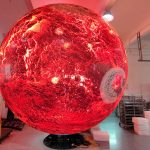
Over the past few years, high resolution LED displays have become one of the fastest-growing segments in the LED industry.
From conference rooms to immersive exhibition halls, from control centers to XR virtual production, more and more users are focusing on how “image quality” and “detail” impact experience and decision-making.
Yet when it comes to purchasing, many fall into a common trap: assuming that higher resolution always means better results.
In reality, whether a resolution is appropriate depends on viewing distance, content type, and budget balance.
For close-up, high-end scenarios, high resolution is indeed indispensable; but for large outdoor billboards, chasing ultra-high resolution can be unnecessary and wasteful.
This article aims to bring clarity: what truly defines a “high resolution LED display”? Where does it deliver real value? And how can you strike the right balance between performance, cost, and application?
“High-resolution” is not just a vague marketing term—it’s defined by pixel pitch and pixel density.
(1) Pixel Pitch: The distance between the centers of two adjacent LED pixels, measured in millimeters. A smaller pitch means more pixels can fit into the same area, resulting in sharper visuals.
(2) Pixel Density: The number of pixels per square meter. Higher density delivers smoother images and more accurate reproduction of text, graphics, and video details.
In general, an LED display qualifies as “high-resolution” when it meets the following conditions:
a: Close Viewing Distance: For example, conference rooms, showrooms, or retail spaces where viewers are within 3 meters and can easily notice fine details.
b: Detail-Intensive Content: Such as 4K/8K video playback, high-definition images, or complex data visualization.
c: High-End Applications: Flagship stores, museums, control rooms, and TV studios where image quality directly shapes the experience and decision-making.
In the LED display industry, resolution is often equated with “clarity.” However, for real-world projects, labels like 2K, 4K, or even 8K are not the ultimate deciding factors.
What truly matters is whether these resolutions deliver a noticeable improvement to the human eye in a given environment—and how they balance with pixel pitch, viewing distance, and budget.
The table below summarizes common resolution standards and their typical applications:
| Resolution | Pixel Dimensions | Total Pixels | Common Applications |
| 2K | 2048 × 1080 | ~2.2 million | Digital cinemas, churches, shopping malls |
| 4K | 3840 × 2160 | ~8.3 million | TV studios, conference rooms, exhibition halls |
| 8K | 7680 × 4320 | ~33.2 million | High-end exhibitions, educational displays, control rooms |

Unlike televisions, LED displays are not limited to fixed aspect ratios.
Thanks to modular design, they can be configured into almost any size or proportion.
For example, a stock ticker might be built as a 3840 × 200 long strip, while an immersive art installation could take the form of a 2048 × 2048 square wall.
This flexibility means buyers should not rely solely on “2K/4K/8K” as purchasing criteria. Instead, the focus should be on viewing distance and pixel pitch.
Even if an LED wall is configured to reach 8K resolution, the visual difference may be negligible if the audience is too far away.
To learn more about 4K LED display options and their practical applications, visit our 4K LED Display page.
Pixel pitch is one of the key parameters of an LED display.
It refers to the physical distance between the centers of two adjacent pixels, which directly determines how many pixels can fit into a given area and how detailed the image will appear.
Common pixel pitches include P1.2, P1.5, P2.0, P3.9, and P6.67. The smaller the pitch value, the higher the pixel density and the finer the image qual
When choosing a display, pixel pitch must always be evaluated in relation to the intended viewing distance. A widely accepted formula is:
For practical use, this is often simplified to:
Viewing distance (meters) ≈ Pixel pitch (mm) × 1.2–1.5
This rule helps determine whether a finer pitch is truly necessary, preventing overspending on resolution that the human eye may not perceive at longer distances.
| Pixel Pitch (P) | Pixel Density (pixels/m²) |
| P1.2 | 694,444 |
| P1.25 | 640,000 |
| P1.5 | 444,444 |
| P1.538 | 422,500 |
| P1.667 | 360,000 |
| P1.86 | 289,444 |
| P1.953 | 262,144 |
| P2 | 250,000 |
| P2.604 | 147,456 |
| P2.976 | 112,896 |
| P3 | 111,111 |
| P3.076 | 105,625 |
| P3.33 | 90,000 |
| P3.91 | 65,536 |
| P4 | 62,500 |
| P4.81 | 43,264 |
| P5 | 40,000 |
| P5.925 | 28,561 |
| P6 | 27,556 |
| P6.67 | 22,500 |
| P8 | 15,625 |
| P10 | 10,000 |
| P16 | 3,906 |
High resolution LED screens offer outstanding visual performance, but they also come with certain trade-offs.
Understanding both sides helps in making an informed decision.
(1) Refined image quality: Smaller pixel pitch and higher pixel density deliver detailed visuals without visible grain, even at close distances.
(2) Immersive experience: Ideal for museums, galleries, XR production, or virtual studios where immersion is key.
(3) Clarity at short distances: In conference rooms, studios, or premium retail spaces, high resolution ensures text, charts, and fine details remain sharp and legible.
(4) 4K/8K compatibility: Fully supports ultra-high-definition content, meeting the demands of professional broadcasting, control rooms, and high-end displays.
(1) Higher cost: At the same screen size, high resolution LEDs are significantly more expensive than standard resolution options.
(2) Greater power consumption: Higher pixel density generally requires more energy and advanced cooling solutions.
(3) More precise maintenance: Fine-pitch displays demand tighter quality control, advanced ICs, and careful calibration, which increases upkeep costs.
(4) Diminishing returns: For long viewing distances or basic content, the visual gains of ultra-high resolution may not be noticeable, making the investment less cost-effective.
High resolution LED displays are defined not only by pixel density and resolution, but also by several technical parameters that directly shape the viewing experience.
Indoor use: Typically 800–1500 nits, enough to deliver vivid images without causing visual fatigue.
Outdoor use: 3000–5000 nits or higher is required to remain visible under direct sunlight.
Too low → dull images and unreadable content.
Too high → excessive power consumption and reduced panel lifespan.
Brightness is not just a number—it’s about balancing visual comfort, energy efficiency, and durability.
Refresh rate determines image smoothness and stability, especially for video playback and live broadcasting:
1920Hz → Sufficient for standard video and presentations.
3840Hz → Broadcast-level quality for exhibition halls and video walls, virtually flicker-free.
7680Hz → Demanded in sports broadcasting and concerts to ensure fast-motion scenes remain sharp.

Driver IC model → Core determinant of stable high refresh performance.
PWM dimming technology → Critical for accurate grayscale and smooth transitions.
In practice, refresh rate is not just a “spec sheet number,” but the outcome of driver architecture and dimming strategy working together.
Contrast: Determines the purity of black levels, directly affecting image depth and visual dimensionality.

Color Accuracy: Depends on LED chip quality and calibration processes, ensuring faithful reproduction of brand colors and precise visuals.
In high-end applications—such as retail showcases, stage performances, and museum exhibitions—contrast and color accuracy often have a greater impact on visual impact than resolution alone.
Many premium LED displays also support HDR and wide color gamut (DCI-P3), further enhancing realism and viewer immersion.
| Feature | High Resolution LED (P1.2–P2.5) | Standard Resolution LED (P3–P6.67) |
| Pixel Density | Extremely high, rendering rich, fine details | Medium, with controlled granularity |
| Optimal Viewing Distance | Best for close-range (≤3m) viewing | Adequate for mid-to-long range (≥5m) viewing |
| Ideal Applications | High-end conference rooms, studios, museums, flagship retail stores | Outdoor billboards, stage performances, sports venues |
| Content Presentation | Supports 4K/8K content, text, and detailed graphics | Standard video and images, suitable for distant viewing |
| Cost | Higher initial and maintenance investment | Lower cost, high cost-effectiveness |
SMD technology mounts red, green, and blue LED chips directly onto the PCB, enabling full-color display.
Supports small pixel pitches and high brightness; relatively simple production and maintenance.
Indoor and outdoor high-resolution video walls, conference rooms, studios, flagship retail stores.
Projects seeking cost-effectiveness and versatility.

GOB builds on SMD by coating LEDs with a transparent epoxy or silicone layer, enhancing protection against dust, moisture, and impact.
Significantly improved durability, suitable for high-traffic or public environments.
Retail stores, public spaces, rental event screens.
Locations with high foot traffic or requiring extra protection.

COB technology directly bonds LED chips onto the PCB without separate packaging, increasing integration and thermal management efficiency.
Enables ultra-small pixel pitches, high reliability, reduced glare, and improved viewing angles.
Ultra-high-resolution displays, professional broadcasting, control rooms, immersive art experiences.

High-end projects demanding exceptional image quality and fine detail.

| Feature | SMD | GOB | COB |
| LED Mounting | Mounted on PCB surface | SMD with protective glue coating | Chips directly bonded to PCB |
| Protection | Minimal (exposed) | Glue layer (waterproof, dustproof, impact-resistant) | Resin layer (shockproof, dustproof, moisture-resistant) |
| Maintenance | Easiest (chip-level replacement possible) | Moderate (glue layer makes removal harder) | Most difficult (chip-level repair challenging) |
| Display Quality | High-precision color mixing | Similar to SMD | Higher integration, reduced glare |
| Durability | Moderate | Good | Excellent |
| Cost | Standard | Slightly higher | Typically highest |
| Typical Applications | Indoor, outdoor, rental, advertising | Indoor, outdoor, public spaces, high-traffic areas | High-end, fine-pitch, ultra-high-resolution applications |
The value of high-resolution LED displays varies depending on the application. When selecting a display, categorizing use cases as “essential / optional / unnecessary” can help optimize both return on investment and viewing experience.

Close-range filming demands rich detail and accurate color to avoid visible pixelation. High-resolution LED displays support 4K/8K content, making them ideal for studios, virtual production spaces, and real-time compositing scenarios.

Readability is critical in environments displaying charts, data feeds, and monitoring screens. High-resolution LED ensures clarity, minimizing the risk of misinterpretation or missed information due to pixelation.

Close-range viewing directly impacts engagement and enhances image and text clarity, allowing visitors to appreciate fine artwork or exhibit details and interact more effectively with the display.

High-resolution LED displays showcase products with finer detail and richer colors, enhancing brand perception, attracting customer attention, and creating a premium shopping environment.

For audiences located more than 10 meters away, the benefits of high-resolution screens are minimal. Standard-resolution displays provide sufficient clarity for distant viewing while avoiding unnecessary costs.

For audiences seated far from the stage, fine detail is less critical. Standard or low-resolution LED displays still deliver clear visuals for large venues such as concerts, theaters, or live performances.
The cost of high resolution LED screen is not fixed and depends on several key factors:
(1) Pixel Pitch: Smaller pixel pitch means higher pixel density, which increases manufacturing costs. Ultra-fine pitch screens designed for close-range viewing are significantly more expensive than mid-range pitch screens.
(2) Resolution: Higher nominal resolutions (2K, 4K, 8K) require more modules and advanced hardware, resulting in higher prices.
(3) LED Technology: Different packaging technologies—COB, GOB, SMD—affect costs significantly.
COB offers ultra-high reliability and extremely fine pitch but comes at a premium. GOB enhances protection against dust and moisture and is slightly more expensive than standard SMD.
(4) Screen Size: Larger displays require more modules, drivers, and higher installation and transportation costs.
(5) Additional Features: Water-resistant, dustproof, anti-collision designs, and enhanced heat dissipation can also raise the price.
| Resolution | Typical Pixel Pitch | LED Technology | Total Pixels | Price Range (USD/m²) |
| 2K | P2.5–P3 | SMD | ~2 million | 400–1,000 |
| 4K | P1.5–P2 | SMD/GOB | ~8.3 million | 1,500–3,000 |
| 8K | P1.2 | COB | ~33 million | 4,000–6,000 |
High resolution LED display offers clear advantages in detail, immersive experiences, and professional applications.
Choosing the right display, however, requires careful consideration of viewing distance, content requirements, and the specific environment.
Understanding the relationships between pixel pitch, resolution, LED technology, and pricing will help you make the optimal decision, balancing cost and performance.
Whether for conference rooms, broadcast studios, museums, or flagship retail stores, we can recommend the most suitable high-resolution LED display solution, ensuring every investment delivers real value.
Contact us today for professional advice and tailored solutions.
Send us a message at any time if you have any problems or quotes, and our professional team will reach out you in 24 hours.
Building 2, Hongfa High-tech Park, Shiyan Street, Baoan District, Shenzhen, China.
Email: sales@linsnled.com
Phone: +86-186-7583-4292
Ⓒ 2010-2026 All Rights Reserved by Shenzhen Linsn LED Co.,Ltd.