


Table of Contents
1. The Technological Revolution in Visual Clarity
2. From CRT to Micro LED: LED Screen Resolution Evolution
3. Technological Evolution of LED Clarity and LED Screen Visuals
4. LED Screen Visuals in Real-World Applications
5. Future Trends: Higher Resolution or Superior Visual Experience?
6. LED Screen Buying Guide
7. Linsn LED High Resolution LED Screen Case
8. Conclusion
The launch of the first color CRT television in 1970 marked a significant breakthrough in TV display technology.
However, the display technology of that time is vastly different from today’s standards.
The pixel size of CRT televisions was as large as 2.54mm, which was cutting-edge technology back then.
In contrast, today’s advancements in LED screen resolution have drastically improved display clarity.
Today, the 2024 release of Micro LED technology boasts pixel units as small as 0.01mm, showing an astonishing exponential growth in resolution.
According to a report from Statista in 2023, the annual growth rate of global LED display resolution is as high as 17%, meaning the pixel density of mainstream screens doubles approximately every 4.2 years.
From the 2.54mm pixels of CRT TVs to the 0.01mm pixels of Micro LED, the evolution of display technology has been nothing short of remarkable.
Next, we will analyze the resolution requirements for different devices and use cases, and explore whether “higher resolution is always better.”

New technologies like Micro LED and OLED offer higher resolutions (even reaching 8K and beyond), along with more vibrant colors, finer details, and stronger contrast, significantly enhancing the visual experience.
However, technological improvements don’t always correlate directly with visual effects.
According to data from the 2024 CES, when the PPI exceeds the human eye’s retinal limit, the subjective improvement in clarity is only 3.7% (p<0.05).
This raises a question: has the increase in resolution entered a diminishing returns phase?
So, is higher screen resolution always better? While display technology continues to advance in terms of resolution, can ultra-high resolutions provide significant visual improvements?
It seems that the progress is more of a numerical advancement, rather than a noticeable change in detail.
Smartphone screens typically have very high PPI. With the screen being in close proximity to the eyes, increasing the PPI can significantly improve the user experience.
For example, the iPhone 12 series from Apple achieves a PPI of 460, ensuring that users can enjoy highly detailed visuals even during high-resolution video playback or image display.
Compared to smartphones, television screens generally have a lower PPI.
Considering that TV screens are typically viewed from a greater distance (usually 2 meters or more), improvements in PPI do not lead to noticeable differences in visual quality.
For example, a 55-inch 4K TV has a PPI of around 80-100, and most viewers won’t notice any graininess, even when the picture appears very clear.
For large-scale LED displays, especially in outdoor advertising and large sports venues, the required PPI is much lower.
For instance, a P2 LED screen resolution (with a 2mm pixel pitch) provides sufficient clarity for most use cases.
P5 (with a 5mm pixel pitch) or P10 (with a 10mm pixel pitch) screens are clear enough for most use cases.
Therefore, the choice of screen resolution is not just about the PPI number; it also depends on the actual usage scenario, viewing distance, and the viewer’s field of vision.
The resolution of the human eye is limited, often referred to as the retinal resolution limit.
According to scientific research, the human eye can distinguish approximately 60-70 PPI under ideal conditions.
This means that if the PPI of a display device exceeds this limit, it becomes difficult for the naked eye to perceive any further improvement in resolution.
Extremely high pixel density can even result in wasted resources.
Studies have shown that when the viewer is more than 5 meters away from the screen, increases in pixel density have a minimal impact on visual experience.
In such scenarios, optimizing parameters like brightness and contrast is more important than simply pursuing higher pixel counts.
With continuous technological advancements, the resolution of LED displays has significantly improved.
From the early low-resolution CRT televisions to today’s high-resolution Micro LED displays, technological evolution has revolutionized the visual experience.

Resolution | Measurement (Pixels) | Total Pixels | Notes |
8K (Ultra HD) | 7,680 × 4,320 | 33,177,600 | Highest resolution for consumer use, suitable for ultra-large screens |
4K (Ultra HD) | 3,840 × 2,160 | 8,294,400 | Mainstream high-end TV and monitor resolution |
1080p (Full HD) | 1,920 × 1,080 | 2,073,600 | HD standard, widely used in TVs and monitors |
720p (HD) | 1,280 × 720 | 921,600 | Common for streaming and low-end devices |
480p (SD) | 640 × 480 | 307,200 | Early standard definition, now mostly used in older devices |
Packaging technology directly influences the resolution and display quality of LED screens. The main packaging technologies are:

SMD (Surface-Mounted Device)
Suitable for general display needs, offering good brightness and stability.
While it supports higher resolutions, it may face challenges in heat dissipation and power limitations as resolution increases.

COB (Chip-on-Board)
Multiple LED chips are directly mounted on the circuit board, improving brightness and resolution.
This technology is used for high-demand display applications.

Micro LED
Each pixel is made up of an individual LED chip, providing extremely high brightness and resolution, eliminating the pixelated effect.
This is the direction for future ultra-high-resolution display technologies.
These packaging technologies continuously drive improvements in LED resolution, with Micro LED standing out for its unique design that results in more lifelike and detailed visuals.
In addition to resolution, modern LED screens also improve image quality through the following technologies:
(1) MEMC (Motion Estimation and Motion Compensation): This frame interpolation technology inserts additional frames to smooth image motion, reducing motion blur.
It is especially effective in high-speed scenes (such as sports events or action movies), providing a smoother visual experience.
(2) AI Upscaling: AI upscaling technology uses artificial intelligence algorithms to analyze and fill in missing pixels in an image, enhancing low-resolution content to near HD or 4K resolution quality.
(3) HDR (High Dynamic Range): HDR technology expands the brightness and color range of an image, producing more realistic lighting and shadow effects.
When combined with high-resolution screens, HDR significantly improves the visual experience, especially in terms of detail and depth.
These technologies not only increase the resolution of LED screens but also enhance the overall image quality, delivering a more realistic and clearer visual experience.
Different application scenarios have varying requirements for LED resolution:
(1) Outdoor Advertising: For outdoor advertising screens, the resolution requirement is generally lower due to the longer viewing distance.
LED resolutions between P10 and P16 are commonly used in such applications, as these screens have larger pixel pitches, making them suitable for long-distance viewing.
At such distances, a lower resolution does not affect the readability or visual impact of the advertisements.”
(2) Indoor Conference Screens: In conference and presentation settings, where the viewing distance is much shorter, a higher resolution is needed.
Indoor LED screens with resolutions between P2.5 and P3 are commonly used in these scenarios, ensuring clear detail display while also providing high brightness and contrast to meet the lighting requirements of indoor environments.
(3) Film Production LED Walls: In virtual shooting and film production, LED walls play a crucial role.
Since the production process requires clear detail presentation, virtual shooting LED walls typically use very high resolutions.
The LED screens used in modern virtual shoots generally have resolutions of P1.2 or higher to ensure precise pixel display and support digital effects.
The core advantage of virtual shooting lies in its ability to provide directors and actors with a real-time adjustable virtual environment without the need for physically constructing complex sets.
However, the success of this technology heavily depends on high-definition LED walls, especially when showcasing intricate backgrounds and details.
The higher the screen resolution, the clearer the details presented, enhancing the immersive experience and avoiding visual distortion or separation caused by low resolution.
For example, LED walls with 4K or 8K resolutions can display complex virtual scenes, such as distant mountains, ocean waves, or bustling cities, with minimal visible flaws or transition artifacts.
If the resolution is too low, even viewers at a distance may easily notice pixelation or image distortion, which can affect the sense of realism and immersion.
As display technology has advanced rapidly, the improvement of resolution has long been the industry’s focal point.
However, as resolution continues to increase, reaching or even surpassing the limits of human visual perception, a new dilemma emerges: when resolution approaches its physical boundaries, should it remain the sole criterion by which display technology is evaluated?
Micro LED and OLED currently represent the two leading display technologies, each offering distinct visual experiences.
Micro LED, with its self-emissive properties, delivers superior brightness, a broader color gamut, and a longer lifespan compared to OLED.
Additionally, it eliminates the risk of burn-in, positioning it as a promising direction for high-end display devices.
On the other hand, OLED continues to dominate the high-end market, particularly renowned for its deep blacks and extraordinary contrast ratios.
Looking to the future, Micro LED, with its modular design, is likely to offer greater versatility in catering to various size and resolution demands, potentially establishing itself as the dominant technology in the display landscape.
Quantum dot technology represents a significant breakthrough in display technology.
By utilizing the unique light-emitting properties of nanoscale particles, it enhances color accuracy and contrast to a remarkable degree, resulting in displays that are more vivid and lifelike.
Quantum Dot LED (QLED) technology, when compared to traditional LCDs, provides enhanced brightness and superior color fidelity, making it an essential technology for elevating the visual experience.
Simultaneously, AI-driven optimization is transforming picture quality management.
Through advanced machine learning algorithms, AI is capable of dynamically adjusting brightness, contrast, and color to enhance the viewer’s experience in real-time.
For 4K and 8K displays, AI upscaling technology can generate additional image detail, compensating for any imperfections in the source content and significantly improving overall screen visual quality.
With the ongoing evolution of display technology, the integration of ultra-high brightness and HDR10+ (high dynamic range) has dramatically improved image depth and realism.
Ultra-high brightness ensures that displays remain clear and visible, even under direct sunlight, while HDR10+ refines the representation of both shadow and highlight areas, enriching the overall image with greater detail.
These advancements are not just about increasing resolution but enhancing the viewer’s immersive visual experience.
Looking ahead, the future of display technology will increasingly prioritize the holistic optimization of various technological advancements.
Rather than solely focusing on “higher resolution,” the next frontier in displays will likely offer a more immersive, detailed, and authentic visual experience, pushing the boundaries of realism.
The resolution of an LED screen is not just about chasing numbers, but should be chosen according to the viewing distance and content type.
Linsn’s full range of products covers all scenarios to help you make a rational choice:
Linsn LED Products
Application Scenario
Recommended Series
Core Technology
Typical Parameters

Indoor HD Conference
MA600 Series
SMD packaging, supports 16K, 8K, 4K, and FHD displays
Pixel pitch P1.25-P2.5 / Brightness 400-600 nits

Outdoor Advertising Screen
MA960 Series
IP65 protection, high brightness and energy-saving
Pixel pitch P10 / Brightness 6500 nits
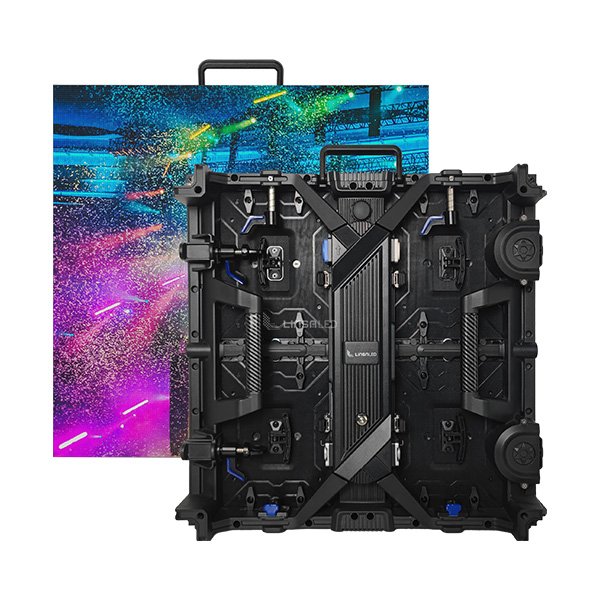
Film & Virtual Production
Linsn XR Series
7680Hz real-time rendering, accurate color calibration
Pixel pitch P P2.604mm / Ultra-low latency

Retail Digital Signage
GOB LED, Multi-screen seamless splicing
Pixel pitch P1.86 & P2.5mm / 3840Hz
GOB technology: Linsn LED LC60C poster LED screen adopts GOB packaging, with a pixel pitch as low as P1.86, eliminating the granularity (compared with SMD screen).


Budget Range | Recommended Configuration |
Economy | FHD 1080P + Basic HDR display |
Mid-range | 2K 1440P + MEMC motion compensation + COB packaging |
High-end | 4K HDR10+ + Micro COB packaging + 240Hz refresh rate |
Choose the right configuration to avoid over-investing.
Select different functional modules based on actual needs to ensure the cost aligns with the desired performance.
Linsn LED supports modular customization, for example, corporate showrooms can mix and match based on regional needs to save costs.
Linsn LED is committed to applying advanced technologies to every product to ensure the screen always delivers stable performance.
COB Packaging Technology: Ultra-high pixel density, zero-mesh effect, ensuring no graininess. Suitable for indoor high-end display needs such as conferences, exhibitions, and TV stations.
Exceptional Durability: Linsn’s Outdoor series is IP65 certified for protection, offering water and dust resistance, making it suitable for various harsh outdoor environments.
It has a lifespan of over 100,000 hours, ensuring long-term, efficient operation.
Linsn LED displays are widely used across various industries and have received recognition from many industry experts.
Whether for film production or commercial displays, we provide suitable solutions for your needs.

Project Overview: Linsn LED’s MA640 Series LED display was installed in Korea, offering a P2.5mm pixel pitch and a large, high-quality display screen.
The magnesium alloy cabinet ensures durability, while the advanced control system and high-quality LED light-emitting materials deliver superior image clarity.

Project Overview: Installed in a high-visibility area in Korea, this large LED video wall features a P2.5mm pixel pitch, delivering stunning image quality and consistent brightness with a wide viewing angle for broad audience reach.
From CRT televisions to Micro LED screens, the leap in visual technology has continuously raised our pursuit of clarity.
From the limits of the human eye to breakthroughs in LED screen resolution and technology, the improvement in resolution has not only transformed our viewing experience but also brought revolutionary changes to display needs across different scenarios.
With ongoing technological advancements, we are about to experience even more realistic and detailed visual experiences.
Linsn LED, as a professional LED panel manufacturer, is dedicated to offering high-quality display products to meet the needs of various scenarios. Feel free to contact us for more information—we are here to provide expert advice and service.
Send us a message at any time if you have any problems or quotes, and our professional team will reach out you in 24 hours.
Building 2, Hongfa High-tech Park, Shiyan Street, Baoan District, Shenzhen, China.
Email: sales@linsnled.com
Phone: +86-186-7583-4292
Ⓒ 2010-2026 All Rights Reserved by Shenzhen Linsn LED Co.,Ltd.


